
Fine Art
Tradition and new ideas on display at 15th Zhejiang Fine Arts Exhibition

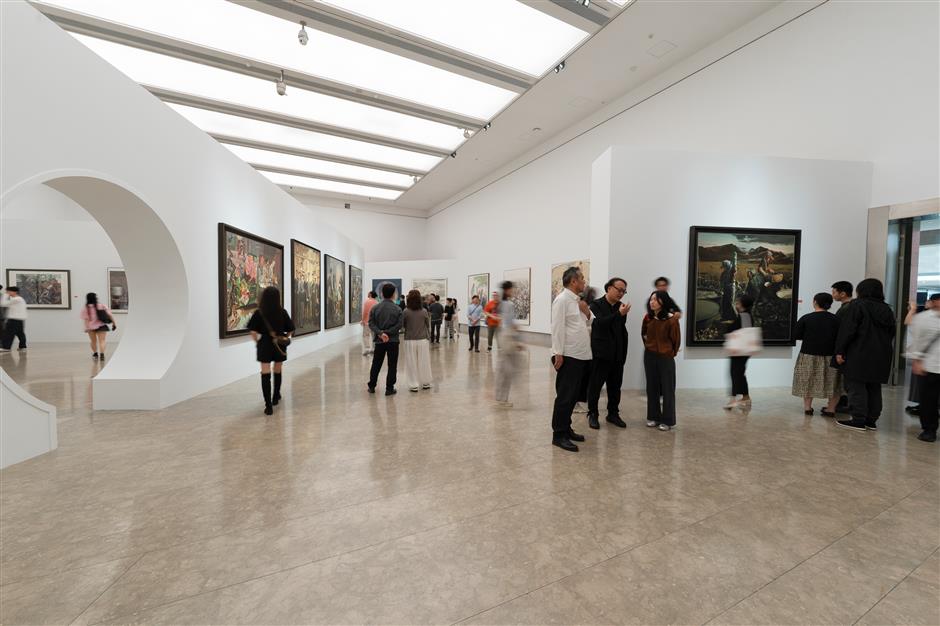
The 15th Zhejiang Fine Arts Exhibition at Zhejiang Art Museum through May 26 displays 713 works that include oil paintings, woodcut prints, ink-wash paintings, sculpture, ceramics, cartoons and digital art.
Hosted every five years, the exhibits compete in the Zhejiang Fine Arts Award, with the winners of the 14 gold, 23 silver and 40 bronze awards announced at the end of May.
Read more: https://www.shine.cn/feature/art-culture/2405146953/


Fine Art
Art Advisory Service Market to Set an Explosive Growth in Near Future | Graval, Fine Art Group
According to HTF Market Intelligence, the Global Art Advisory Service market to witness a CAGR of 6.2% during the forecast period (2024-2030). The Latest Released Art Advisory Service Market Research assesses the future growth potential of the Art Advisory Service market and provides information and useful statistics on market structure and size.
This report aims to provide market intelligence and strategic insights to help decision-makers make sound investment decisions and identify potential gaps and growth opportunities. Additionally, the report identifies and analyses the changing dynamics and emerging trends along with the key drivers, challenges, opportunities and constraints in the Art Advisory Service market. The Art Advisory Service market size is estimated to increase by USD at a CAGR of 0.062% by 2030. The report includes historic market data from 2024 to 2030. The Current market value is pegged at USD.
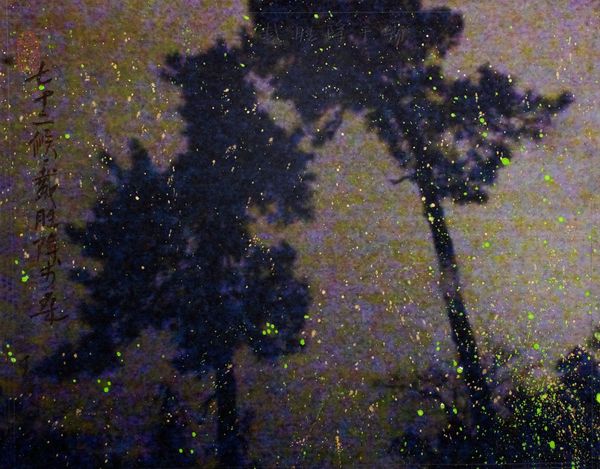
Alisan Fine Arts is pleased to present Hybrid Nature, an exhibition featuring artists Bouie Choi, Chu Chu, and Jia Sung. Although the three artists’ artworks and processes differ, they all explore forms of hybridity, both in the themes at play within them and the mediums they use. Hong Kong-based Bouie Choi is known for her use of reclaimed wood as a material, manipulating and then painting on the surface to create object-like works. Chu Chu takes the natural world as her subject in her photography-calligraphy works, increasingly blending the two practices in her various bodies of work. Jia Sung frequently incorporates embroidered elements into her paintings; interestingly, hybrid figures, part-human and part-animal, often populate her works as she delves into folkloric traditions and tropes.
In her new series of work for this exhibition, Bouie Choi decided to take a more intuitive, expansive approach to her artwork process. Rather than relying on pre-determined subject matter (often plucked from daily news and personal experiences in Hong Kong), she instead focused on trees – in particular palm trees – portraying them as ‘witnesses and the ‘threads’ that connect us all under global challenges’. In contrast to the widely planted hybrid palms used in plantations, the starting point for this series was an article that described how the seeds of the extinct Judean Palm tree—2,000-year-old date palm seeds—were uncovered and revived. The ‘new’ tree was named Methuselah by Dr. Elaine Solowey, after the biblical character known for his longevity, and the idea of this history-defying living being appealed to Choi as a natural, hidden observer.
Read more: https://ocula.com/art-galleries/alisan-fine-arts/exhibitions/hybrid-nature/

Major technology companies are racing to shrink their artificial intelligence (AI) systems as mounting computing costs push them to rethink how they build and deploy their most advanced programs. This efficiency drive marks a significant shift in the industry, where the focus is moving from raw power to streamlined performance.
The process, known as AI optimization, involves refining complex software systems to improve their performance while reducing the computing power they need to run. These efficiency improvements can transform challenging economics into sustainable operations for companies that rely on massive computing systems. Meta’s September partnership with Amazon Web Services (AWS) demonstrated this trend, enabling the firm to offer its AI model Llama in various sizes, optimized for different computing environments.
The Server Farm Challenge
Beneath AI’s prowess lies a costly infrastructure. Running advanced programs requires vast data centers and specialized processors. For instance, Microsoft’s partnership with OpenAI required building multiple AI supercomputers, each using thousands of Nvidia A100 GPUs. These installations consume substantial power — training a large language model (LLM) can require energy equivalent to thousands of households.
This pressure has sparked innovation in software architecture. Google has pioneered various optimization techniques, such as quantization, which reduces the precision of numbers required in calculations while maintaining model performance. Meta achieved efficiency gains with its Llama AL models through architectural improvements, allowing smaller models to perform strongly while using fewer parameters.
Read more: https://www.pymnts.com/artificial-intelligence-2/2024/ai-explained-the-fine-art-of-ai-optimization/


