

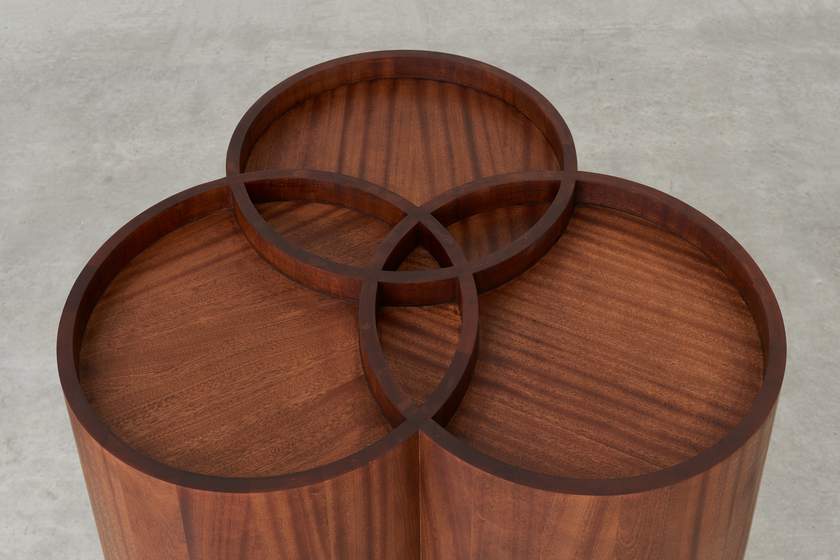
Tate Britain presents a new free exhibition of sculptural works by Rhea Dillon. Titled An Alterable Terrain, the exhibition brings together a group of new and existing sculptures to explore Black women’s labour across histories and geographies. This will be the latest in Tate Britain’s ongoing Art Now series of free exhibitions showcasing emerging talent and highlighting the latest developments in contemporary British art.
Dillon (b. 1996, London) is an artist, writer and poet. Her practice spans painting, filmmaking, writing, installation, olfaction and sculpture, and explores questions of diasporic Blackness. Using material histories alongside theories of minimalism and abstraction, Dillon’s exhibition at Tate Britain conjures an expressive and poetic mode of storytelling through sculpture.
An Alterable Terrain presents a series of works that comprise fragments of an amorphous body. Six sculptures evoke the eyes, mouth, soul, reproductive organs, hands, feet and lungs of a Black woman. Viewed together, these disparate features underline the foundational role Black women’s physical, reproductive and intellectual labour has played in the history of the British Empire. Dillon evokes these experiences through considered materials – crystal plates cast in soap, molasses, and the scent of sweat; dried calabashes collected from Jamaica; a net curtain like the one in her Jamaica-born grandmother’s house.
While developing the works, Dillon approached the gallery space as a container for the body – its roof and rafters evoking an overturned ship’s hull. Simultaneously, the architecture conveys a human spine. These visual codes deeply enmesh with those of the slave ship, recalling histories tethered to geographies of the transatlantic and experiences of transnational Black diasporas.