

There exists an ongoing trope in art wherein the artist, so impassioned in their pursuit to become one with nature, describes this process as a literal dissolvement of the self into the earth. In Shakespeare’s The Tempest (1623), an elemental spirit sings of a shipwrecked king’s human form blending into the ocean floor, detailing for audiences how his body parts have scattered into coral and pearls. And this is a tradition that extends both From German Romanticism to Rousseau’s cryptic paintings that seem to pull the viewer into the mystic landscape; and more contemporarily too: Antony Gormley’s carbuncle encrusted bronze male statues that reveal themselves with the changing tides, and Doig’s entire body of work seems to relate to desirous surroundings (and, possibly, his perpetual status as a physical and psychological outsider), or even Vija Celmins explorations where the artist’s hand seems to disappear into the process.
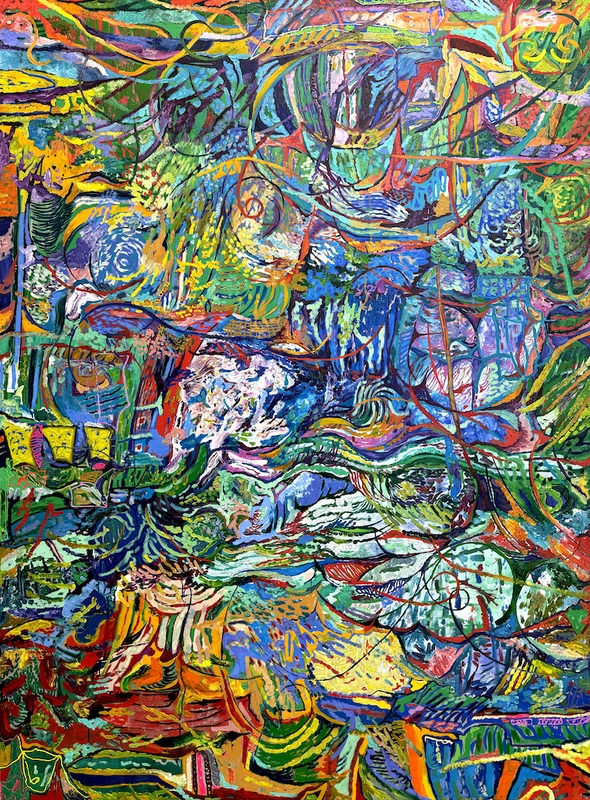
This tradition continues with Moldovan artist Ksenia Dermenzhi’s newest body of work, whose Invisible Paths brings her sophomore solo BEERS London after a sold-out exhibition in 2022 and a recent group show with James Cohan Gallery in New York that placed the young artist in the purview of noted American collectors, as well as a forthcoming inclusion in an exhibition focusing on contemporary landscape painters at London’s prestigious Saatchi Gallery.