
Art Market
Game Art Services Market 2024 Key Insights | Juego Studios, RetroStyle Games, Pixune Studios


Press Release, Orbis Research This detailed report provides an extensive analysis of the Game Art Services Market, covering historical, current, and future projections. The market estimates included in this report have been meticulously calculated using a rigorous research methodology to ensure the data’s accuracy and reliability. This methodology incorporates a thorough approach, integrating primary and secondary research, as well as consultations with experts in the field.
This structured methodology ensures a thorough and robust analysis of the subject matter, allowing for the acquisition of diverse perspectives and insights essential for informed decision-making and strategic planning in the business domain. The estimations of the market are carefully computed by considering the intricate interplay of prevailing market dynamics alongside a myriad of economic, social, and political variables that exert their influence on the Market Game Art Services. Market data is influenced by various elements such as regulations, government spending, and the direction of research and development efforts. These elements serve as pivotal markers that influence the overall market dynamics.


Art Market
UK Sanctions Update: New OFSI Reporting Requirements for High Value Dealers and Art Market Participants

Late in 2024, the UK’s Office of Financial Sanctions Implementation (“OFSI”), the agency within His Majesty’s Treasury that is charged with the implementation of financial sanctions in the UK, introduced new sanction measures aimed generally at augmenting the operation and enforcement of UK financial sanctions and targeted specifically at High Value Dealers (“HVDs”) and Art Market Participants (“AMPs”).
These new measures come into force in May 2025—just two months from now—making time very much of the essence.
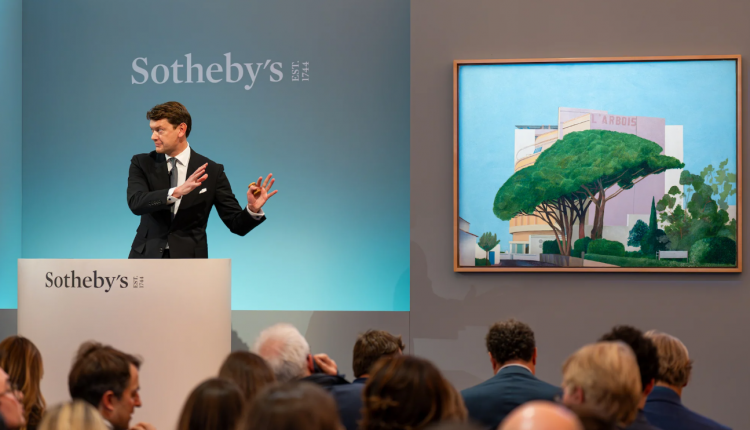
The news around the art market is often filled with record-breaking and awe-inspiring sales numbers of well-known artworks. 2024 was no different; be it the $6.2 million sale of the infamous Comedian or Magritte’s L’empire des lumières sold for $121.1 million. But their sensational sales represent just a small fraction of what truly goes behind in auctions. If anything, 2024 was the year of the affordable artwork.
In October, Artmarket released its 29th annual Contemporary Art Market report. The report revealed that 132,000 contemporary artworks changed hands during the period; of these, 108,000 transactions involved artworks worth $5,000 or less. This meant that 82% of the contemporary artwork transactions dealt with low-value artworks. This marked a 6 percent increase in demand for works worth $5,000 or less compared to the previous year. Other reports suggested that the trend was not limited to contemporary art but rather common across all genres. Artists like Damien Hirst and Takashi Murakami were at the forefront of such demand.
Read more: https://www.art-insider.com/the-rise-of-affordable-art-market-boom-for-works-under-5k/6816

It is tempting, at the end of the year, to look back and try to draw some grand conclusion about the events, large and small, that appear to have moved the art market one way or another over the last 12 months. December is as good a time as any for reflection, but it’s important to consider the past as part of a continuum, in the art world as everywhere else. Barring a cataclysmic event—knock on wood—people will very likely always be buying art. The end is not nigh and the market advances. Where you draw the line, as journalist, collector, dealer, or auction house bigwig, will determine your perspective.
That said, this year was not without memorable events: 2024 was peppered with lawsuits, auction records, and disappointing performances, more than a few gallery closings, and a lot of hot air forecasting that the art market was near the end. The art market, perhaps even more than, say, the stock market, is a fragile mechanism, often more affected by perception and sentiment than by clear fundamentals. It’s a bit of a reversal of Chicken Little: The more one proclaims the sky is falling, the faster it falls, at least for a little while.
It certainly seemed like the sky was falling over at Sotheby’s this year. While the auction house came out clean in its legal battle with Russian oligarch Dmitry Rybolovlev in February, the proceeding illuminated much of its shadowy private sales process. Still, it may have been the high point for the company. Just a few days later, Sotheby’s introduced a new, more standardized fee structure that it said would bring greater transparency to the market. It was a bold move that favored buyers over sellers. One market expert told me at the time that the restructure was Sotheby’s way of saying “this is what we are worth.” Fortune does not always favor the bold, however: Last week, with the new policy in place only since May, Sotheby’s reversed course. The subtext of CEO Charles Stewart’s interview with the Art Newspaper last week: No one liked the change, especially not sellers, who were not enticed to alleviate the market’s “supply issues.”


