
Art Market
Japan’s Art Market on Upward Trend, Led by Domestic Buyers

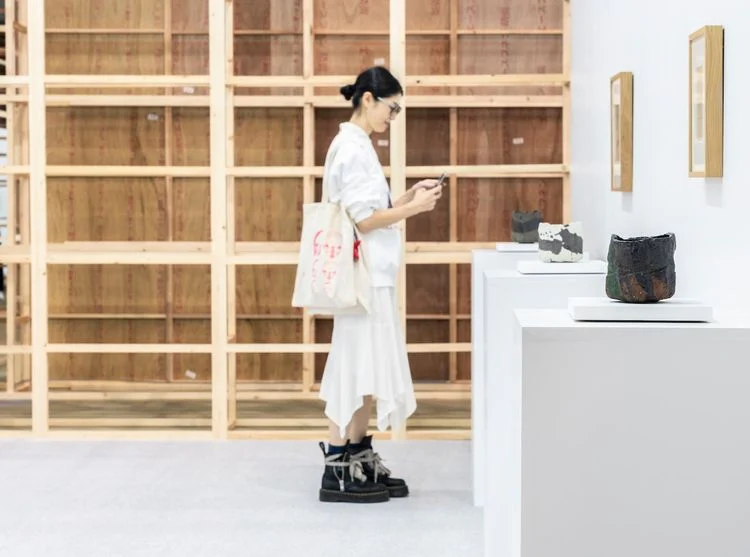
Japan became Asia’s second largest art market in 2023, accounting for five percent of the region’s share, according to a recent report released by Japan’s Agency for Cultural Affairs and economist Clare McAndrew, who also wrote Art Basel and UBS’s Survey of Global Collecting in 2024.
In the latter, McAndrew tracked the collecting habits of 3,660 high-net-worth individuals in 14 art markets—including Japan, China, and the U.S.—from 2023 to 2024, including their event attendance, motives for collecting, and interactions with different sectors of the art industry.
The UBS report was commissioned within the context of a fluctuating and uncertain buying environment, with the global market declining by four percent in 2023. It concluded that despite challenges, the market was stabilising and there was increasing support for new galleries and emerging artists. It also found that collectors generally preferred to buy through dealers, followed by art fairs, and auction houses.
Read more: https://ocula.com/magazine/art-news/japans-art-market-on-upward-trend-domestic-buyers/


Art Market
UK Sanctions Update: New OFSI Reporting Requirements for High Value Dealers and Art Market Participants

Late in 2024, the UK’s Office of Financial Sanctions Implementation (“OFSI”), the agency within His Majesty’s Treasury that is charged with the implementation of financial sanctions in the UK, introduced new sanction measures aimed generally at augmenting the operation and enforcement of UK financial sanctions and targeted specifically at High Value Dealers (“HVDs”) and Art Market Participants (“AMPs”).
These new measures come into force in May 2025—just two months from now—making time very much of the essence.
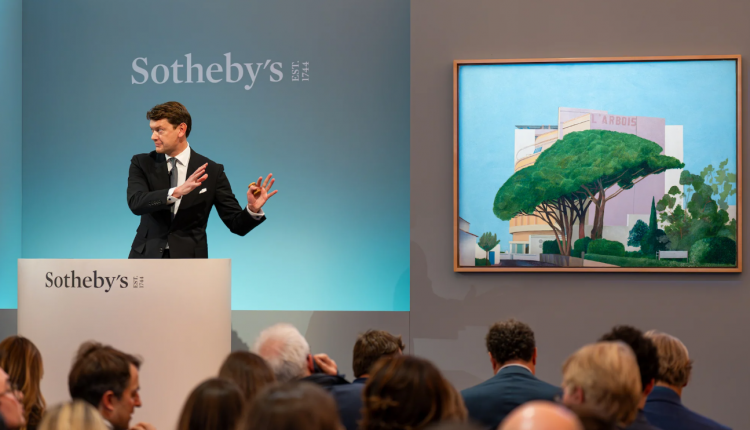
The news around the art market is often filled with record-breaking and awe-inspiring sales numbers of well-known artworks. 2024 was no different; be it the $6.2 million sale of the infamous Comedian or Magritte’s L’empire des lumières sold for $121.1 million. But their sensational sales represent just a small fraction of what truly goes behind in auctions. If anything, 2024 was the year of the affordable artwork.
In October, Artmarket released its 29th annual Contemporary Art Market report. The report revealed that 132,000 contemporary artworks changed hands during the period; of these, 108,000 transactions involved artworks worth $5,000 or less. This meant that 82% of the contemporary artwork transactions dealt with low-value artworks. This marked a 6 percent increase in demand for works worth $5,000 or less compared to the previous year. Other reports suggested that the trend was not limited to contemporary art but rather common across all genres. Artists like Damien Hirst and Takashi Murakami were at the forefront of such demand.
Read more: https://www.art-insider.com/the-rise-of-affordable-art-market-boom-for-works-under-5k/6816

It is tempting, at the end of the year, to look back and try to draw some grand conclusion about the events, large and small, that appear to have moved the art market one way or another over the last 12 months. December is as good a time as any for reflection, but it’s important to consider the past as part of a continuum, in the art world as everywhere else. Barring a cataclysmic event—knock on wood—people will very likely always be buying art. The end is not nigh and the market advances. Where you draw the line, as journalist, collector, dealer, or auction house bigwig, will determine your perspective.
That said, this year was not without memorable events: 2024 was peppered with lawsuits, auction records, and disappointing performances, more than a few gallery closings, and a lot of hot air forecasting that the art market was near the end. The art market, perhaps even more than, say, the stock market, is a fragile mechanism, often more affected by perception and sentiment than by clear fundamentals. It’s a bit of a reversal of Chicken Little: The more one proclaims the sky is falling, the faster it falls, at least for a little while.
It certainly seemed like the sky was falling over at Sotheby’s this year. While the auction house came out clean in its legal battle with Russian oligarch Dmitry Rybolovlev in February, the proceeding illuminated much of its shadowy private sales process. Still, it may have been the high point for the company. Just a few days later, Sotheby’s introduced a new, more standardized fee structure that it said would bring greater transparency to the market. It was a bold move that favored buyers over sellers. One market expert told me at the time that the restructure was Sotheby’s way of saying “this is what we are worth.” Fortune does not always favor the bold, however: Last week, with the new policy in place only since May, Sotheby’s reversed course. The subtext of CEO Charles Stewart’s interview with the Art Newspaper last week: No one liked the change, especially not sellers, who were not enticed to alleviate the market’s “supply issues.”


